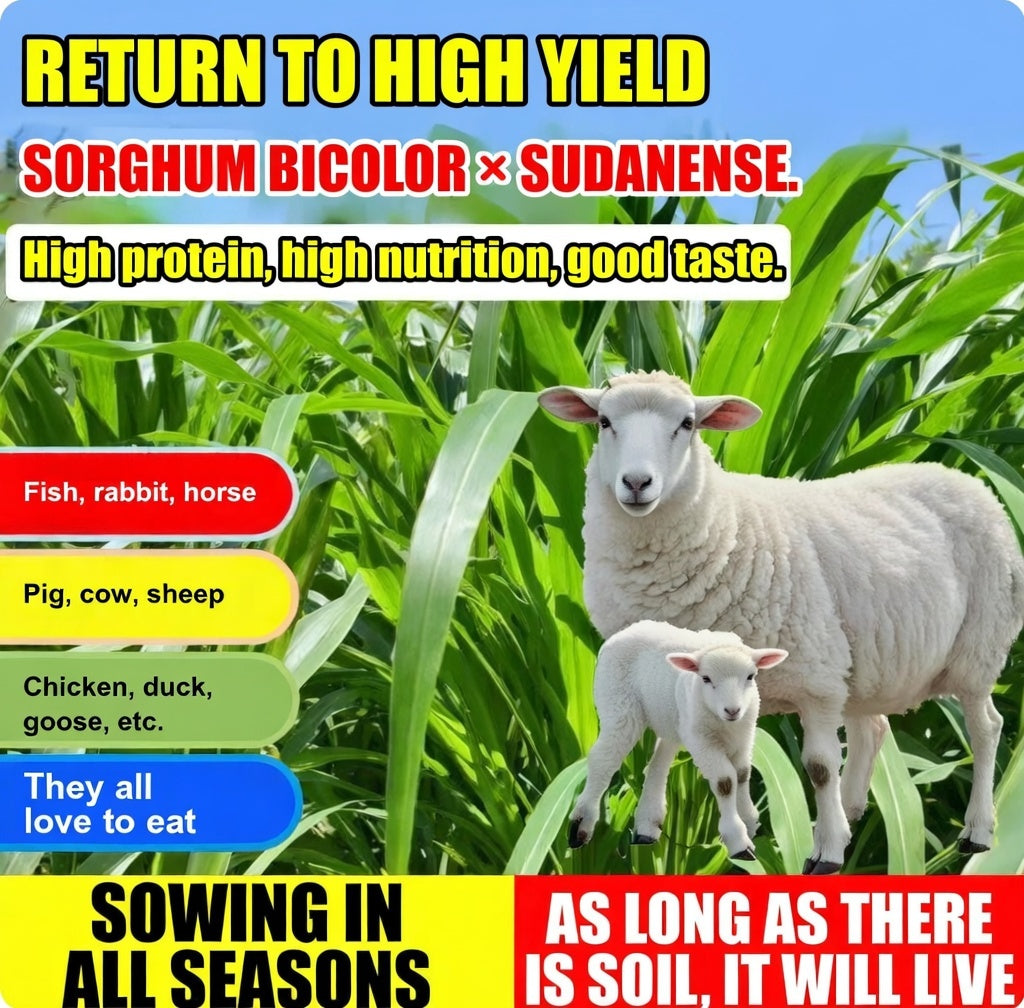


High-Yielding Forage Seed YT
High-Yielding Forage Seed YT
Hybrid Sorghum-Sudan Grass Seeds
Sorghum bicolor × Sorghum sudanenseA drought-tolerant forage grass developed for livestock feeding, hay, and silage production in warm and semi-arid regions.

Why Farmers Choose This Variety
This hybrid has been selected for strong performance across a range of growing environments. Results may vary depending on local conditions, soil quality, and crop management practices.
First cutting generally possible 30–45 days after sowing under suitable conditions.
Performs well in warm climates with limited rainfall. Suited to semi-arid environments.
Capable of multiple harvest cycles when properly managed and stubble height maintained.
Suitable for sandy, loamy, and clay soils. Developed root system supports growth in moderate soils.

Typical Forage Composition
Indicative values based on dry matter analysis. Actual nutritional content will vary depending on harvest timing, growing conditions, and management practices.
| Component | Typical Range (DM Basis) | Suitability |
|---|---|---|
| Crude Protein | 10–14% | Cattle, sheep, horses |
| Fiber Profile | Moderate | Grazing, hay, silage |
| Natural Sugars | Moderate | Supports silage fermentation |
| Palatability | High | All major livestock types |
* Values represent typical ranges only. Results vary based on soil fertility, irrigation, and harvest stage.

Suitable Growing Conditions
Soil Requirements
- Sandy, loamy, and clay soils with good drainage
- Recommended soil pH: 5.5 – 7.5
- Performs in moderately poor soils
Sowing Guidelines
- Spring and summer when soil temp exceeds 15°C
- Row spacing: 30–40 cm
- Seeding depth: 2–3 cm
Water Management
- Maintain moist soil during germination
- Irrigate during extended dry periods if needed
Fertilization
- Apply base fertilizer before sowing
- Nitrogen after harvest may support regrowth

Water & Fertilization
Irrigation
- Keep soil moist during germination phase
- Irrigate during prolonged dry spells if available
- Drought tolerance reduces but does not eliminate water needs
Fertilization
- Apply balanced base fertilizer before sowing
- Post-harvest nitrogen application may support regrowth
- Soil testing recommended for optimal results

Harvesting & Usage Guide
Fresh Forage & Grazing
First harvest typically when plants reach 80–100 cm height. Leave 10–15 cm stubble to encourage vigorous regrowth. Suitable for rotational grazing systems.
Silage Preparation
Harvest at 100–120 cm for silage. Chop into small pieces, compact tightly, and store airtight to allow proper fermentation.
Hay Production
Dry forage under sunlight until moisture drops below 15% before baling and storage.

Common Uses
Common Questions
Our Commitments to You